
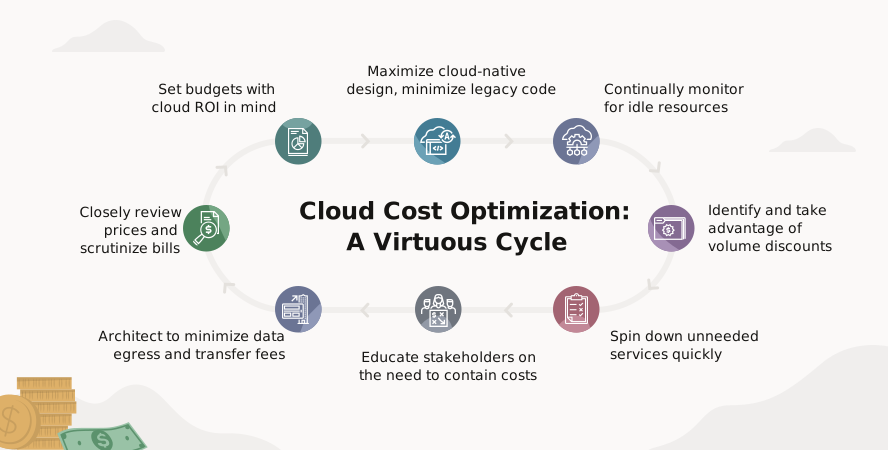
Cloud platforms were built for speed and flexibility—but that same flexibility often leads to unpredictable costs. Many organizations still manage cloud spend reactively, reviewing invoices after the fact and chasing overruns once the damage is done.
Artificial intelligence changes this model entirely.
AI-driven cloud cost optimization enables organizations to anticipate, prevent, and continuously optimize spending—rather than simply reacting to it.
The Limits of Traditional Cloud Cost Management
Conventional cost controls rely on static rules and manual oversight:
- Budget alerts that trigger only after thresholds are exceeded
- Rightsizing based on historical averages
- Periodic cleanup of idle or orphaned resources
While these approaches offer baseline visibility, they struggle in modern environments where workloads scale dynamically and architectures change daily. As cloud usage grows more complex, static controls become increasingly ineffective (AWS Cloud Financial Management Guide, 2023).
How Machine Learning Enables Proactive Optimization
Machine learning excels at identifying patterns across large, evolving datasets—making it well suited for cloud cost intelligence.
Predictive Spend Forecasting
Instead of asking "Why did costs spike last month?", ML models forecast future spend under current conditions, allowing teams to intervene early. Predictive analytics has become a core pillar of modern cloud cost optimization strategies (Flexential, 2024).
Intelligent Inefficiency Detection
AI systems go beyond identifying idle resources. They uncover nuanced inefficiencies such as:
- Over-aggressive autoscaling during predictable usage windows
- Gradual performance-to-cost degradation in long-running workloads
- Inefficient service combinations that appear reasonable in isolation
These insights are often missed by dashboard-driven human reviews (Ternary, 2024).
Continuous, Real-Time Optimization
Advanced AI-driven platforms can recommend—or automatically execute—actions such as:
- Adjusting autoscaling thresholds
- Scheduling workloads for lower-cost execution windows
- Selecting more cost-efficient service configurations
This creates a feedback loop where optimization is continuous rather than periodic (Teradata, 2024).
From Cost Cutting to Cost Intelligence
The true power of AI isn't just reducing spend—it's enabling better decisions.
AI-enhanced cost intelligence helps organizations understand:
- Which workloads deliver the highest business value per dollar
- Where higher spend is justified for reliability or performance
- How today's architectural decisions impact long-term cost trajectories
This reframes cloud cost management from a finance exercise into a strategic capability (CloudZero, 2024).
Implications for Cloud-First Organizations
For teams operating on platforms like Amazon Web Services, Microsoft Azure, and Google Cloud Platform, AI-driven optimization delivers tangible advantages:
- Fewer surprise bills
- Reduced manual oversight
- Stronger alignment between cost, performance, and growth
- Greater confidence scaling infrastructure sustainably
Organizations that master cloud economics won't simply spend less—they'll understand their spending better than their competitors.
Looking Ahead: Autonomous Cloud Optimization
The future of cloud infrastructure is autonomous. Systems will increasingly monitor themselves, learn from usage patterns, and adapt in real time—without waiting for human intervention.
AI-driven cost optimization is one of the first visible steps toward that future.
Reactive cost management belongs to the past.
Proactive, intelligent optimization is how modern cloud environments remain scalable, resilient, and sustainable.
References
- Amazon Web Services. AWS Cloud Financial Management Guide, 2023.
- Flexential. Cloud Cost Optimization and Predictive Analytics, 2024.
- Ternary. What Is Cloud Cost Optimization?, 2024.
- Teradata. AI-Driven Cloud Cost Optimization, 2024.
- CloudZero. Cloud Cost Intelligence Explained, 2024.